(This article is part of a series of guest columns written by innovators in the nonprofit sector. PNNOnline will be featuring a new "Challenges of the New Century" guest column each Friday.)
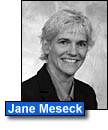
By Jane Meseck
 Four years ago, nearly 80 percent of technology grant applications sent to Microsoft by nonprofits weren't funded because they lacked a comprehensive understanding of technology. It was apparent that the nonprofit community was struggling to figure out how to integrate technology to enhance their mission and outreach.
Technology was seen as something they knew they needed, but few people understood how to use it in their mission or community outreach. Because they had limited computer expertise and financial resources, they gave little thought to the idea that technology could change their organizational effectiveness, improve service delivery and continue their mission.
 Today, nonprofits are beginning to understand how technology can be used for a strategic advantage. Whether it is for developing a basic organizational platform, creating new Web communities networking similar organizations, developing online client tracking systems or online fundraising and marketing, the nonprofit community has seen how technology can improve their capacity. Many are using technology to discover amazing opportunities for their organizations, employees and communities.
Yet for most nonprofits the integration of technology into their organization is an expensive venture -- costly to develop and maintain. Not surprising, the significant barrier for incorporating technology is not the cost of software and hardware, but the lack of in-house technology know-how -- the "humanware."
 I have seen a significant gain in momentum in bringing technology know-how to the nonprofit community through both the development and growing support of on-the-ground nonprofit technology services by nonprofits such as NPower, CompuMentor, IT Resource Center, Technology Works For Good, One/Northwest and TechRocks, as well as innovative technology services and tools that promise to revolutionize the way technology is used in the nonprofit community.
"Adopting and Adapting Technology Tools"
The key is the marriage of high tech and high touch -- adopting and adapting technology tools and services available in the private sector to the nonprofit mission and culture.
 For Microsoft, funding technology programs -- which enhance nonprofit organizational effectiveness -- translates into a commitment to improve communities. The Microsoft & NPower National Partnership is an example of the growing movement to support technology services for nonprofits. Formed in 1999 with support from Microsoft and other corporate and community foundations, NPower's mission is to help nonprofit organizations use technology to better serve their communities. NPower offers a variety of no-cost to low-cost assistance, ranging from technology assessments and planning to hands-on help with network implementation, database management, Web site construction and technology training.
The results speak for themselves. In less than one year, NPower has been able to assist 200 nonprofits in the Seattle community, providing over 2,500 hours of consulting, training over 1,000 nonprofit employees and matching 400 technology volunteers to meet the technology needs of nonprofit organizations. NPower is a high-tech start up in the nonprofit world. Their effectiveness comes from their knowledge and understanding of technology and the nonprofit environment, and their ability to identify and implement appropriate technology solutions that address the unique needs -- and build on the unique strengths -- of nonprofit organizations.
For these reasons Microsoft has committed $25 million in financial and software support as start-up funding to expand the NPower model in collaboration with the nonprofit communities in other cities. Additional funding will come from corporations and foundations who support the important role technology plays in the nonprofit and the nonprofit's mission to make our communities stronger, healthier and more vibrant.
New Technology to Help Meet Nonprofit Needs
Microsoft has built its business on innovation and creating solutions for clients needs Microsoft is creating an advanced new generation of software that will drive the Next Generation Internet. We call this initiative Microsoft® .NET, and its purpose is to make information available any time, any place, on any device. People will control how, when, and what information is delivered to them. Computers, devices and services will be able to collaborate directly with each other, and businesses will be able to offer their products and services in a way that lets customers embed them in their own "electronic fabric."
These innovations are not only for the private sector. We see many innovative technology services and tools making their way to the nonprofit sector in the near future. As nonprofits become more technology-savvy they will become more innovative in applying technology to their outreach, and be more willing to try innovative services.
One innovative service currently used to great success by small and medium sized businesses is the Application Service Provider (ASP). An ASP offers access over the Internet to application programs on a subscription basis that would otherwise be installed and maintained on servers or PCs. A nonprofit ASP could provide access to mission critical software tools nonprofits need to use technology in a transforming way. All would be available 24 hours a day with a 99.7-percent reliability guarantee.
An ASP is a cost-effective solution for the small to medium nonprofit business, because they would not have to build and invest in costly infrastructure, maintenance and staff for their technology. Currently, Verizon Foundation is offering ASP back-office and Web services for grantees and NPower will be piloting a nonprofit ASP with nonprofit applications and tools in the Seattle area over the next year, before expanding nationally.
Nonprofits have expressed a need to share data internally and externally with partner organizations. Another innovative technology making its way to the nonprofit sector is the use of XML (eXtensible Markup Language). XML is a way of describing data in a consistent syntax so it can be easily searched, shared and used. Imagine being able to share and access client service data easily with all levels of funders and constituents from the federal and state governments, foundations and communities. XML is rapidly being developed and implemented in the private sector.
One critical service proposed by The Nonprofit Enterprise Network (N-TEN) -- supported by a collaboration of foundations and corporations including Microsoft, Surdna Foundation and AOL Foundation -- is to create a nonprofit standards-setting body to lead an open process of developing data standards, including XML standards, for the nonprofit sector. N-TEN and its funders see the amazing potential these new standards hold for nonprofits.
Innovative technologies coupled with the technology services of NPower and their sister centers; nonprofits will see a full continuum of technology services specifically for the nonprofit sector. Improving our communities through the marriage of high-tech and high-touch.
(Jane Meseck is Community Affairs Program Manager for Microsoft Corp. Jane has been with Microsoft since February 1997. She manages Microsoft's nonprofit technology giving including the Microsoft & NPower National Partnership, Microsoft Technology Leadership Grants and Microsoft's software donation programs. Prior to joining Microsoft, Jane was program manager at the University of Washington's Institute for Public Policy and Management where she conducted and published research on federal and state fiscal policy and its effect on Washington State nonprofits. She also lectured at the Graduate School of Public Affairs. Jane previously worked as a management consultant, designing database solutions for fortune 500 companies. Jane currently serves on several Seattle area nonprofit boards, including NPower, a nonprofit organization serving Puget Sound area nonprofits use technology to accomplish their mission. Jane has a master's degree in public administration from University of Washington and bachelor's degrees in both finance and marketing from Texas A&M; University.)
(Anyone interested in submitting story ideas for this series can do so by following this link pnninfo@mindspring.com. Please include contact information, topic proposal and a brief description of specifics related to nonprofit sector technology and/or innovation included in the column.)