(This article is part of a series of guest columns written by innovators in the nonprofit sector. PNNOnline will be featuring a new "Challenges of the New Century" guest column each Friday.)
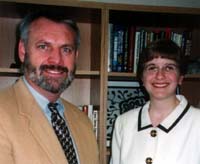
by Joseph A. Connor and Stephanie Kadel-Taras
 "How many more collaborative groups do I have to serve on?" asked the county official. He was attending a meeting of local public and private funders who were struggling to find a better way to solve their community's problems.
Everyone at the table nodded with empathy. They all knew collaboration was needed to address the complexities of modern life, but the demands on everyone's time and energy were getting ridiculous. Especially when nobody was sure what progress they were making toward solutions.
Their frustration reflects one of the most fundamental challenges that the nonprofit field (and other sectors) will face in the coming years: how we organize the work within our communities to solve problems. All other challenges -- from the use of technology to fundraising to management practices to program innovation -- will be driven by new decisions about how the nonprofit, government, and business sectors of society come together and share the work of community life.
This requires us all to work in a "no man's land" located between existing organizational and sectoral spaces, where everyone's roles are up for redefinition. But if we brave this challenge strategically, we need not beset ourselves with multiple competing demands and utter exhaustion.
Why must we re-organize the work of our communities? For one, the convergence of government devolution, information technology, and funding requirements are making it more possible than ever to improve systems and get to solutions. We are seeing that the solutions we want can be achieved with better alignment.
At the same time, we face a "survival of the fittest" challenge to make these changes: as funding, policy, and business growth increasingly reward better organized community systems, the ability to work well in "no man's land" will spell the difference between communities that are succeeding and those that are falling farther behind.
To meet this challenge, we will indeed turn to that old stand-by -- collaboration. But it won't look much like previous experiences we've had. The partners will be much more diverse, the goals will be grander, and the tasks more entwined. And as we work across traditional boundaries, we will manage information, processes, policy, and resources (including our valuable human resources) within a set of performance clusters or systems delineated by community expectations.
 In our research at The Collaboratory for Community Support, we have found that communities are better prepared to tackle these challenges when they have an infrastructure in place to support multisector collaborations.
Some entity must be the "keeper of the keys" for this community work, taking up residence in the no man's land, and ensuring broad community engagement in the process. This kind of "community support organization" (CSO) convenes collaboratives, facilitates meetings, researches best practices, sustains progress, and leverages knowledge and resources across multiple collaborative efforts. It allows communities to make better use of the time and dollars they already put toward community problems without calling for additional resources.
A community support organization can greatly enhance the processes of community work, including direct improvements in efficiency:
As the support needs of each collaborative group ebb and flow over
time, the CSO can target resources appropriately, allowing people and funding to be applied in a just-in-time fashion;
Advances in information and collaborative technologies can be applied to multiple collaborative groups as the CSO specifies and solicits technological solutions to the management of systemic work;
When work is driven by desired system outcomes, the CSO helps the community realize economies of scale and minimize redundancy while preserving multiple strategies to address problems.
A few communities in the U.S. can currently turn to something like a CSO for reorganizing their work. For the rest, the concept of a community support organization quickly resonates with government, nonprofit, foundation, and business leaders, as it did for the folks at the meeting we mentioned earlier.
Experience shows, however, that communities need an external catalyst -- whether through public policy or funding initiatives -- to enable them to develop this infrastructure for success.
At the dawn of a new century, the opportunities are great for communities to reach real solutions for social and economic problems. But they must be encouraged to get the support they need. Once communities have this support, the demands of organizing our work will energize our community members and put solutions within our grasp.
(Joseph A. "Jay" Connor is founder/CEO of The Collaboratory for Community Support. He has extensive leadership experience in the business, nonprofit and public policy arenas. Before founding The Collaboratory three years ago, Jay was President/CEO of Nonprofit Enterprise at Work (NEW), a nonprofit management support organization in Ann Arbor, Michigan. Jay also has more than 20 years of experience in senior business management. Jay holds a Juris Doctorate and Masters in Management from Northwestern University.
Stephanie Kadel-Taras is Director of Research and Publications for The Collaboratory. She has more than ten years of experience in research, writing, and management in nonprofit and government organizations in Florida, New York, and Michigan. She holds a Ph.D. in education and sociology from Syracuse University and an M.A. from the University of Michigan.)
(Anyone interested in submitting story ideas for this series can do so by following this link pnninfo@mindspring.com. Please include contact information, topic proposal and a brief description of specifics related to nonprofit sector technology and/or innovation included in the column.)