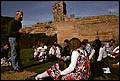
 In many regions across the U.S., educators are offering students "outdoor education" classes where challenging feats, cooperative work and learning about the environment is the focus, rather than Shakespeare or the Internet.
Many observers say this will be the next big trend for classroom innovation. Teachers see outdoor education as a welcome change from sitting in front of a computer, as a way to help build self-esteem, boost cooperation and teamwork among classmates, and also as a way to emphasize the role of nature in our lives.
There is no standardized curriculum for such classes, although individual states and school districts may require a minimum number of outdoor education classes. The Maryland legislature, for example, requires school districts to provide comprehensive environmental programs no less than three times for K-12 students. These students, their parents and teachers agree that the field trips and resulting studies are invaluable, the Washington Post reports.
"Teamwork and cooperation, problem-solving, working together democratically -- that's what we are after," Sandy McGehee, a sixth-grade science teacher at a Washington D.C.-area school, told the Post. "If you've ever been around middle schoolers, that is not necessarily their top priority. But in the world, when you go to work, you work in teams of people all the time, and you may not necessarily know them. We are teaching them lifelong skills, and they have fun in the process."
In Virginia, Gov. James Gilmore announced he will make outdoor education a priority initiative and has formed a committee to coordinate the program. And in Oregon, outdoor education has been part of the curriculum at many high schools around the state for several years.
Because the trend is relatively new, no study has been completed detailing the effects outdoor education has on students -– or what school districts and states consider environmental studies an important part of a student’s learning experience. Few educators argue against taking children into nature and educating them about the environment as a way to help urban youth discover a world they would not normally see, the newspaper reports.
Resources for teachers and education officials considering their own outdoor courses can be found at such sites as Education Planet, the Santa Clara (Calif.) County Education Office site, and the Association for Environmental & Outdoor Education.
Full text of the article is currently found at:
http://www.washingtonpost.com/wp-dyn/
articles/A62307-2000Nov27.html