 Nonprofit environmental groups should take charge of managing sustainable forest logging by getting loans from investors to buy land to save it from development, or buying the rights to develop the land but letting landowners retain their property, according to a Christian Science Monitor report by Ed Hunt, a natural resources writer and editor of Tidepool.org news service.
Hunt states that nonprofits can buy tracts with loans from investors and then can offer environmentally-sensitive, selective logging to generate income to pay back the loans. This practice -- although it sounds counterproductive at first because it continues logging operations -- ultimately provides a long-term solution to deforestation.
The problem many environmental groups face is that timber companies are getting out of logging, which is good, but are then selling their land for commercial development, which is far worse for the planet, Hunt reports.
 One Seattle group, the Mountains to Sound Greenway, is trying this idea before one million acres of forest land stretching through King County foothills succumbs to urban sprawl. Nancy Keith, the organization's director, said active forestry is a better alternative to sprawl, Hunt writes.
"In fact, computer models suggest that forestry can be conducted in a way that returns the old-growth habitat functions more quickly than if the monoculture of a tree farm is simply left alone, according to research conducted by Andrew Carey and others at the Pacific Northwest Research Station's Olympia Forestry Sciences Laboratory," Hunt writes. "In doing the thinning and habitat-creating, a steady income can be derived from a variety of forest products."
Sellers could charge more for wood that is certified as sustainably harvested, and the current demand for this type of wood already exceeds supply, Hunt writes.
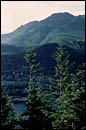 Nonprofits also could buy development rights to private land and set up agreements to manage that land, in turn helping owners of smaller land tracts. Land trusts or community groups could also buy development rights and enter into agreements with such owners to manage the land as a community forest. The wood could be locally milled, providing local jobs in the process, rather than shipping raw logs out of town, Hunt writes.
The community forest idea is being tried in variations up and down the West Coast by different groups, such as the Pacific Forest Trust, and could soon be a viable alternative to current practices in other parts of the nation.
"At first, all this seems counterintuitive - cutting trees to save a forest," Hunt writes. "Yet from a long-term view, you realize that 'saving' the planet is not really what we have to figure out how to do. Instead, we need to learn to integrate our human economy - its measures, capital, and values - with the economy of the natural world - otherwise known as an ecosystem.
"To accomplish this, our local economic values need to change considerably, but some smart folks are already figuring this stuff out."
Full text of the article is currently found at:
http://www.csmonitor.com/durable/2000/07/18/fp11s2-csm.shtml